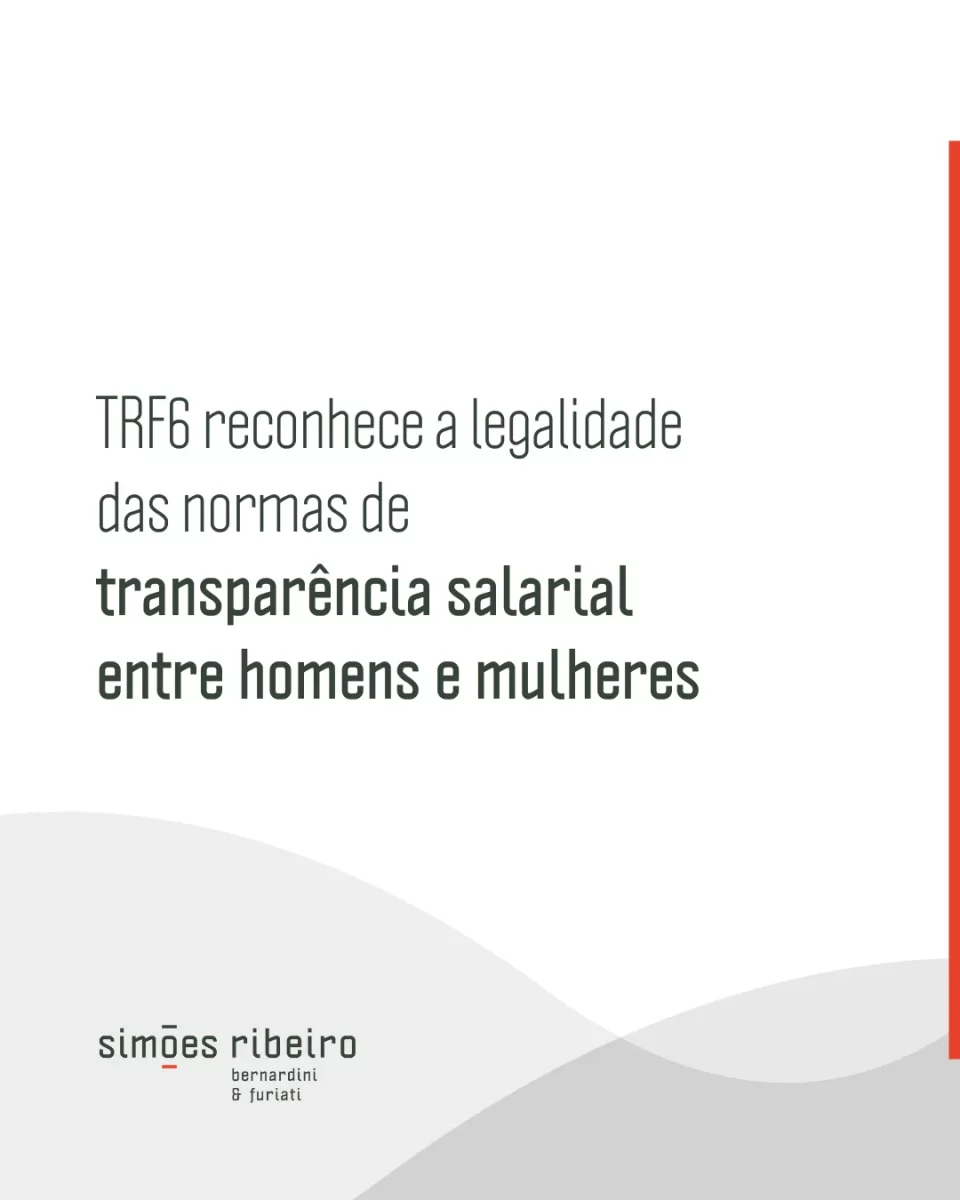
TRF6 recognizes the legality of salary transparency rules between men and women.

The Federal Regional Court of the 6th Region upheld the validity of Decree No. 11,795/23 and Ordinance No. 3,714/23, which regulate Law 14,611/23 and impose on companies with more than 100 employees the obligation to publish transparency reports on the wage gap between men and women. The decision was issued in the judgment of an appeal filed in a writ of mandamus challenging the legality of these acts. The rapporteur, Federal Judge Gláucio Ferreira Maciel Gonçalves, understood that the regulations remain within the limits of regulatory power, without creating obligations not provided for by law.

Among the arguments against the requirements was the potential violation of the General Data Protection Law (LGPD) and constitutional principles related to privacy and free enterprise. The Court, however, concluded that the anonymization provided for in the regulations is sufficient to safeguard the personal data of workers, including in situations where few people occupy certain positions. The rapporteur also emphasized that the disclosure of this information does not compromise trade secrets or commercial strategies.

The decision also confirmed that the participation of unions and employees in the development and implementation of action plans to mitigate wage inequalities is already included in Law 14.611/23, and does not constitute a normative innovation. Thus, the TRF6 reaffirmed the constitutionality and legality of the rules on salary transparency, reinforcing public policies aimed at promoting equal pay between men and women in the corporate sphere.

more publications

Estatuto

The Chamber of Deputies approved, on April 22, 2026, Bill No. 6,461/2019, which establishes the Apprentice Statute. The text now goes to the Senate for consideration and proposes a new regulatory framework for professional apprenticeship in Brazil, especially...

vgbl

Impacts of VGBL taxation for beneficiaries: The Brazilian Federal Revenue Service has come to understand that amounts received by beneficiaries of VGBL plans, due to the death of the policyholder, may be subject to Income Tax, depending on their origin...

NR-16

The update to NR-16 (Regulatory Standard No. 16) reached a new milestone with the publication of Ordinance No. 2,021, of December 3, 2025, by the Ministry of Labor and Employment. The standard approved Annex V, which deals with the activities...

Devedor Contumaz

The concept of a habitual debtor has gained new dimensions in Brazilian legislation with the publication of Complementary Law No. 225, of January 8, 2026, which establishes the Taxpayer Defense Code, regulated by Joint Ordinance RFB/PGFN No. 6/2026....

Inteligência Artificial

Artificial intelligence in Brazil is advancing on the regulatory agenda with the recent approval of Bill No. 2,688/2025 by the Communications Committee (CCom) of the Chamber of Deputies, which establishes the Regulatory Framework for artificial intelligence. The text will still be analyzed...

Licença-paternidade

The enactment of the new law that extends paternity leave from 5 to up to 20 days and creates paternity pay, carried out last Tuesday (31), brings relevant impacts for companies and requires immediate attention to changes in labor legislation. Despite...